Quick answer
PRP (platelet-rich plasma) for hair loss uses a small sample of your own blood, spun to concentrate its platelets, which is then injected into the scalp with the aim of supporting existing hair follicles. The evidence is promising but still developing: some studies suggest it may improve hair density or slow shedding in selected people with early-to-moderate pattern hair loss — but it is not a cure, results vary, and it does not regrow hair where follicles are no longer active. It works best as part of an assessed plan, often a course of about three sessions with maintenance, and only after the cause of your hair loss is established. As a guide, PRP is £325 per session or £870 for a course of three, confirmed at consultation.
“Does PRP work for hair loss?” is one of the most common — and most reasonable — questions we are asked. There is genuine science behind it and genuine hype around it, so this guide sets out honestly what PRP is, what the evidence does and does not show, who it tends to suit, and what a course costs. If you already know you want to be assessed, our PRP treatment page and hair-loss treatment page cover the clinic detail.
What PRP actually is
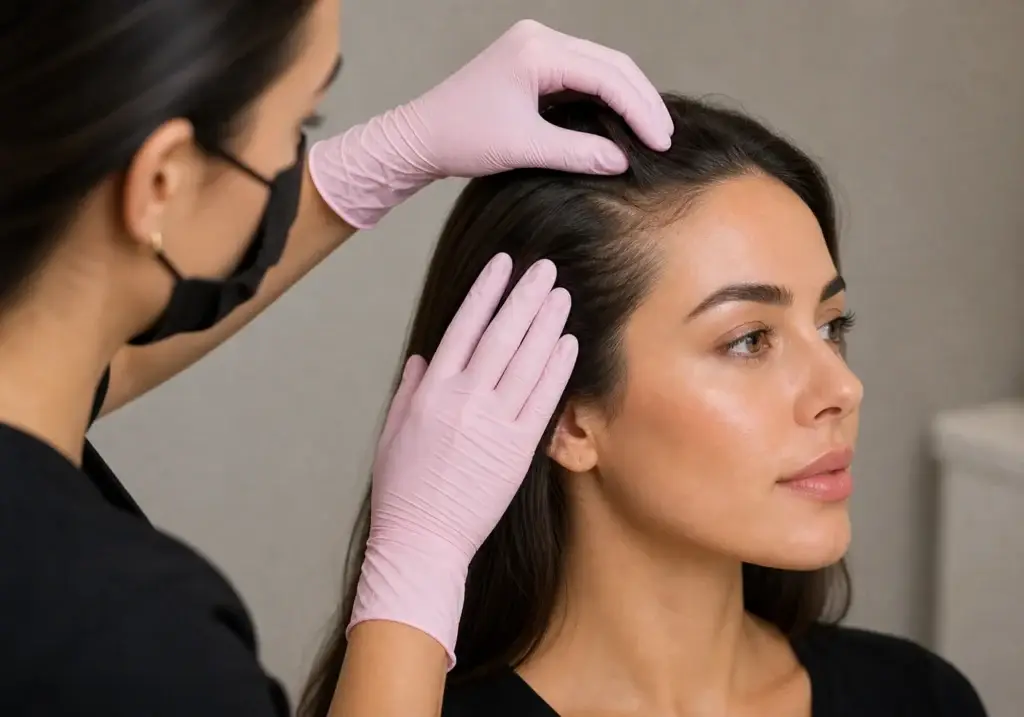
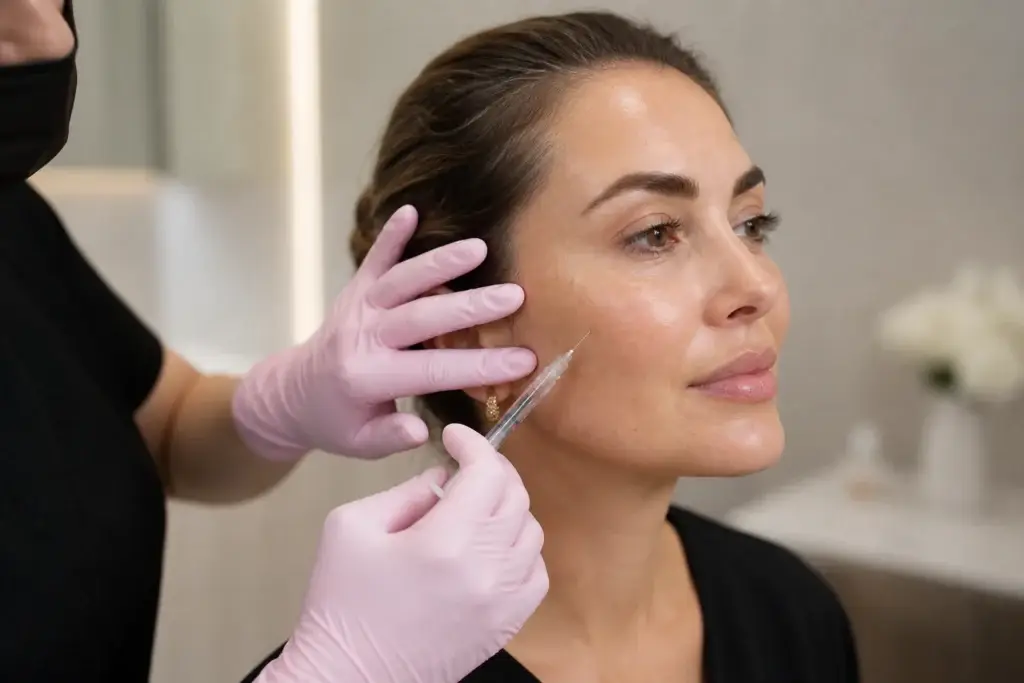
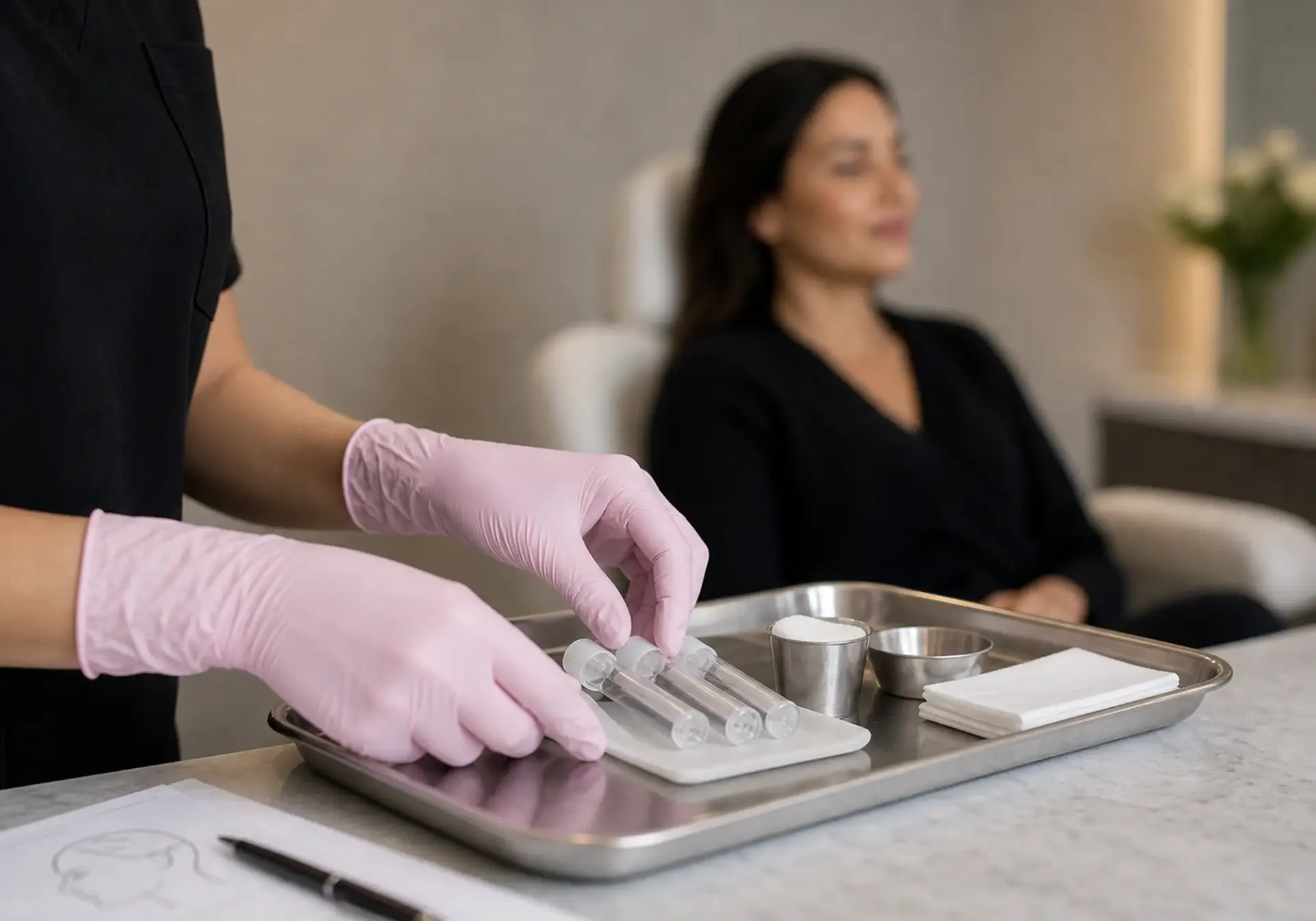
PRP stands for platelet-rich plasma. A small amount of your blood is drawn, then spun in a centrifuge to separate and concentrate the platelets, which carry growth factors. That concentrate is injected into the scalp, where the aim is to support the environment around existing hair follicles. Because it comes from your own blood, it is an autologous treatment. It is a procedure rather than a prescription medicine, and it should be carried out by a trained medical practitioner.

Does PRP actually work for hair loss?
This is where honesty matters. A number of studies — mostly small — suggest PRP may improve hair density or reduce shedding in some people with pattern hair loss (androgenetic alopecia). However, the quality of evidence is variable, treatment protocols are not standardised across clinics, and results are not guaranteed. It is best understood as a supportive, still-emerging option rather than a proven cure, and it is often considered alongside — not instead of — other approaches. Anyone promising guaranteed regrowth is overstating what the evidence supports.
Why the cause of your hair loss has to be established first
Hair loss is a symptom with many possible causes, and PRP is only relevant to some of them. A proper assessment looks at whether the pattern fits androgenetic (pattern) hair loss, a temporary shedding phase (telogen effluvium, for example after illness, stress or childbirth), a medical or nutritional cause (such as thyroid changes or low iron), an autoimmune cause (alopecia areata), or scarring hair loss — where follicles are lost and cannot be revived. PRP is generally aimed at pattern hair loss with follicles still present; it is not appropriate for scarring hair loss or completely bald areas, and some causes need medical treatment rather than PRP. If a medical or nutritional cause is likely, we would look into that — and it is worth raising sudden or patchy hair loss with your GP too.
The main approaches to pattern hair loss
PRP is one option among several, and they are often combined. This is for orientation only — what is right for you is a clinical decision:
| Approach | What it is | Things to weigh |
|---|---|---|
| PRP | Injections of your own concentrated platelets into the scalp | Emerging evidence; a course plus maintenance; not a cure |
| Topical treatment | Pharmacy topical medicine applied to the scalp | Evidence-backed for many; needs ongoing use; discuss with a pharmacist or doctor |
| Prescription tablets | A prescription-only medicine used in some men | Prescription and assessment required; benefits and risks discussed with a doctor |
| Hair transplant | Surgical redistribution of hair follicles | More involved; for suitable, more advanced cases |
| Treating an underlying cause | e.g. correcting low iron or thyroid problems | Where a medical cause is found, this comes first |
The course and what to expect
PRP for hair is usually given as a course rather than a one-off — commonly around three initial sessions a few weeks apart, followed by maintenance over time. Any change is gradual and measured over months, not days, and realistic aims are usually to slow loss and achieve a modest improvement in density — not a new hairline. Results vary between individuals, and maintenance is part of the plan.
Downtime, risks and side effects
Because PRP uses your own blood, the risk of a reaction to the material itself is low, but it is not risk-free. It is normal to have some scalp tenderness, redness, mild swelling or a headache after treatment, usually settling within a day or two. Less common risks include infection at injection sites and bruising. It may not be suitable for people with certain blood conditions, those on some blood-thinning medicines, or where there is active scalp infection. We go through your history and the specific risks with you before you decide.

What it costs
As a guide, PRP is £325 per session, or £870 for a course of three, with maintenance sessions priced individually. Because hair loss is individual, the right plan — whether PRP, another approach, or investigating a medical cause first — is agreed after assessment, and the quote is confirmed at consultation. These are guide prices and do not commit you to treatment; if we do not think PRP is right for you, we will say so.
Frequently asked questions
Does PRP really work for hair loss?
For some people with early-to-moderate pattern hair loss it may help improve density or slow shedding, but the evidence is still developing and results are not guaranteed. It is not a cure, and it will not regrow hair where follicles are no longer active.
How many sessions will I need?
It is given as a course — commonly around three initial sessions a few weeks apart, then maintenance. Your exact plan is agreed at assessment.
When will I see results?
Gradually, over months rather than days. The realistic aim is usually to slow loss and modestly improve density, not to create a new hairline.
Is PRP permanent?
No. Any benefit is maintained with ongoing sessions; without maintenance, the underlying tendency to hair loss continues.
Does it hurt, and is there downtime?
There can be brief discomfort during injections and some scalp tenderness afterwards; downtime is usually minimal. Numbing options can be discussed.
Is PRP better than minoxidil or tablets?
They are different things and are often used together rather than as rivals. Medicines have their own evidence base and are discussed with a doctor or pharmacist; PRP is a procedure. Which combination suits you is a clinical decision.
Could my hair loss be medical?
Possibly. Causes such as low iron, thyroid problems or a temporary shedding phase are common, which is why assessment — and sometimes blood tests or a word with your GP — comes before treatment.