
Tear Trough Filler London
Tear Trough Filler London at Volt Cartel in Shoreditch, London. Doctor-led consultation and tailored treatment planning for tear trough hollowing, lid-cheek transition, under-eye shadowing, and upper cheek support.
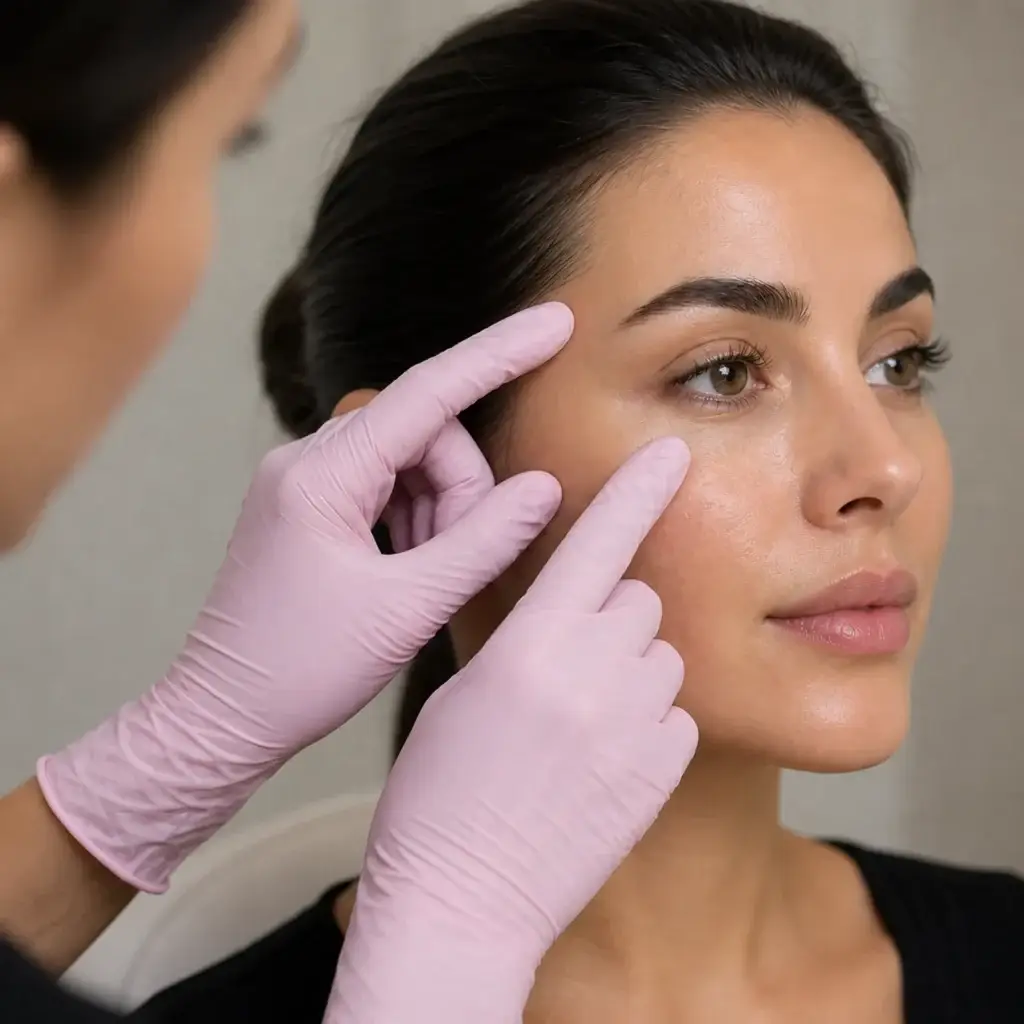
Quick answer
Tear trough (under-eye) filler can soften a shadowed under-eye hollow, but it is not right for every tired-looking eye — bags, pigmentation and skin laxity need different approaches. It is hyaluronic-acid filler in a delicate area, so it should follow a careful assessment by an experienced medical injector.
How Tear Trough Filler Compares to Alternatives
The tear trough is one of the more technically demanding areas to treat with filler, and it is not the only option for dark circles and under-eye hollowing. The right approach depends on the cause: where hollowing and shadowing are structural (lost volume, thinned skin), filler can be effective; where pigmentation is the primary driver, skincare or laser may be more appropriate; where laxity is significant, surgical intervention may be the only option to produce a meaningful change.
| Tear Trough Filler | Eye Cream / Topicals | |
|---|---|---|
| What it does | Restores volume in the tear trough to reduce hollow shadowing | Addresses surface hydration and mild pigmentation |
| Best for | Structural hollowing, volume loss under the eye, early infraorbital shadows | Dryness, mild puffiness, and surface-level dark pigmentation |
| Results last | Typically 12–18 months | Ongoing — dependent on continued use |
| Reversible | Yes — hyaluronic acid can be dissolved with hyaluronidase | N/A — no lasting structural change |
See our Dermal Fillers page for more on hyaluronic acid injection options.
Tear Trough Filler at Volt Cartel
Tear trough filler at Volt Cartel addresses the periorbital hollow — the concave transition between the lower eyelid and the upper cheek — using carefully placed hyaluronic acid. The tear trough is one of the most technically demanding areas of the face to treat with filler because the skin is exceptionally thin, the vascular anatomy is complex, and the margin between a natural result and an obvious one is narrow. Treatment is only carried out after thorough assessment of the periorbital anatomy and a considered discussion of whether filler is the right intervention.
Not every patient presenting with under-eye hollowing is a suitable candidate for filler. Excess lower eyelid skin, prominent fat pads, festoons, or mid-face descent that makes the hollow appear deeper than the actual tissue deficiency may all be better addressed through other means. Your clinician will be direct about this at consultation, which is why an honest assessment at the outset matters.
Where filler is appropriate, product is placed below the orbicularis oculi muscle using a cannula or fine needle technique, targeting the nasojugal groove and infraorbital sulcus. Volume used is typically conservative — usually 0.3 to 0.8ml per side — as over-correction in this area is visible and difficult to reverse without hyaluronidase.
What tear trough filler can help with
Tear trough filler may be appropriate for patients with a clear hollow at the nasojugal groove, dark shadowing caused by volume deficiency rather than pigmentation, or a tired appearance at rest that is due to the orbital–cheek junction becoming more defined with age or weight loss. It may also be considered as part of a mid-face filler plan where mid-face descent is contributing to the appearance of the tear trough by reducing support to the lower eyelid.
How tear trough filler is planned
The consultation includes a standing, seated, and reclined assessment of the lower eyelid and periorbital area, as the appearance of the tear trough changes significantly with position and lighting. Your clinician will assess lower eyelid skin quality, orbicularis tone, fat pad prominence, and whether mid-face support is affecting the depth of the hollow. If mid-face descent is a primary contributor, treating the cheek may improve the tear trough more than placing filler directly into the hollow.
A test of the area using gentle pressure or a specific assessment manoeuvre may help determine whether the concavity is tissue-volume related or primarily structural. Photography is taken before treatment. A conservative approach with a review at four weeks is standard — most patients are reassessed before any additional volume is considered.
Suitability, safety, and treatment intensity
Tear trough filler is not suitable for patients who are pregnant or breastfeeding, have significant lower eyelid skin laxity or fat herniation, have prominent festoons (malar mounds), or have a history of severe swelling from previous filler in this area. Patients with very thin lower eyelid skin may be at higher risk of the Tyndall effect — a bluish discolouration caused by superficially placed hyaluronic acid — and require careful product selection and placement depth.
The periorbital area carries the infraorbital artery, angular artery, and ophthalmic vascular branches. Vascular anatomy in this region demands a cautious and experienced approach. Hyaluronidase is stocked in clinic for emergency use. Clinicians at Volt Cartel will not treat tear troughs where the risk-to-benefit assessment does not clearly favour proceeding. Suitability is confirmed at consultation, and your clinician will advise honestly if this treatment is not the most appropriate option for your concern.
What happens during tear trough filler
The appointment typically takes 30 to 45 minutes. A topical anaesthetic is applied to the lower eyelid and periorbital area before treatment. Product is placed using a fine cannula entered through a small entry point below the orbital rim, or a fine needle in specific anatomical positions depending on the clinical plan. Cannula technique is preferred in most cases as it allows smooth placement below the muscle with reduced risk of bruising and vascular injury.
Mild swelling is expected immediately after treatment, and the area often looks quite different from the intended final result on the day. Swelling typically resolves over three to ten days. Bruising beneath the eye is possible and may take up to two weeks to clear fully. The final result is reviewed at four to six weeks once all tissue response has settled.
Results, courses, and maintenance
Where tear trough filler is well-suited to the patient, results typically last 12 months or longer, with some patients finding filler in this area persists well beyond 18 months due to the low-movement nature of the periorbital tissue. In most patients, the result is a softening of the orbital shadow and an improvement in the refreshed appearance at rest rather than a dramatic structural change.
Maintenance is guided by individual response. Some patients find a single treatment meets their goal for two years or more; others prefer an annual assessment to maintain the result. Hyaluronidase can dissolve the product at any point if required.
Pricing: Tear trough filler pricing per session depends on the volume of product required to address your concerns. A full quote is provided at your consultation.
Why choose Volt Cartel in Shoreditch
Tear trough filler requires more clinical judgement than most filler treatments — the difference between an appropriate candidate and an unsuitable one matters significantly for the outcome. At Volt Cartel, the consultation for periorbital filler is thorough, and clinicians are willing to advise against treatment where the anatomy, skin quality, or patient expectation does not align with what filler can safely achieve.
The clinic is in Shoreditch, East London. All consultations for tear trough filler are treated as substantive clinical appointments rather than preliminary steps toward a predetermined outcome.

Doctor’s Note
Tear trough treatment is one of the areas I approach most carefully in the clinic. The anatomy beneath the eye is complex, the skin is thin, and the margin between a well-placed result and a visible problem is narrow. I assess each patient to determine whether filler is appropriate or whether the under-eye concern is better addressed with a different approach — not everyone is a good candidate, and I’ll say so directly.
— Dr Nino Rionidze, Lead Doctor & Clinic Manager, Volt Cartel Shoreditch
Potential benefits
- ✓Reduces the hollow or dark shadow under the eyes caused by volume loss
- ✓Softens the transition between the lower lid and the upper cheek
- ✓Fine cannula technique minimises bruising and allows even product distribution
- ✓Results typically last 9–12 months
- ✓Hyaluronic acid filler is dissolvable if refinement is ever required
Concerns this treatment may be considered for
These links explain the concern in plain language. They do not confirm that this treatment is suitable for you.
What to expect
- Consultation and suitability assessment
- Review of goals, medical history, and previous treatments
- Treatment plan explained before anything is started
- Clinical photography or marking may be used where appropriate
- Treatment performed in a calm clinic setting
- Aftercare and review timing explained before you leave
Aftercare and downtime
- Avoid touching or massaging the treated area unless advised
- Avoid strenuous exercise, heat, and alcohol for the initial period advised
- Do not book facial treatments immediately after injectables
- Expect mild tenderness, swelling, or small marks to settle gradually
- Attend your review appointment if one is recommended
Questions about Tear Trough Filler London
What does tear trough filler treat?
Tear trough filler addresses the hollow or shadow that forms under the eye between the lower eyelid and upper cheek. It is most effective when the dark circle is caused by volume loss or shadowing rather than by pigmentation, prominent blood vessels, or significant skin laxity.
Is everyone suitable for tear trough filler?
No. This is one of the most assessment-dependent areas in aesthetic medicine. Tear troughs caused by thin skin, visible vessels, excess skin laxity, or deep structural issues may not respond well to filler — and in some cases filler can worsen the appearance. Thorough assessment before treatment is essential.
How long does tear trough filler last?
Results typically last nine to twelve months, though this varies between individuals. The periorbital area metabolises product at its own rate, influenced by skin quality, the amount of eye movement, and individual factors.
What technique is used?
At Volt Cartel, tear trough treatment uses a fine cannula rather than a needle where appropriate. A cannula allows product to be placed evenly beneath the orbital rim and significantly reduces the risk of bruising and vascular complications compared to a needle.
Does tear trough filler hurt?
The area is typically numbed with a topical anaesthetic cream before treatment. Most patients find the procedure well tolerated. Some pressure or mild discomfort is normal; any sharp or sudden pain should be flagged to your clinician immediately.
What are the risks?
Bruising and swelling are the most common side effects, typically resolving within one to two weeks. More serious but rare risks include Tyndall effect (a bluish discolouration), lumpiness, filler migration, and vascular occlusion. The periorbital area requires particular care and experience.
How much does tear trough filler cost?
Tear-trough filler is a delicate treatment priced by the product used and your treatment plan. Guide prices are on our pricing page, and because the under-eye needs careful assessment, your clinician confirms suitability and the exact cost at consultation before treating.
How soon will I see results?
Some improvement is visible immediately after treatment. However, initial swelling can temporarily exaggerate the result. The true outcome is best assessed at two to four weeks once all swelling has fully settled.
Can tear trough filler be dissolved?
Yes. Hyaluronic acid filler can be dissolved with hyaluronidase if the result is unsatisfactory or if a complication arises. This reversibility is an important safety feature and a key reason hyaluronic acid products are preferred in this high-risk area.
How is tear trough different from cheek filler?
Tear trough filler addresses the under-eye hollow directly. Cheek filler placed along the upper cheekbone can sometimes improve the tear trough indirectly by restoring the volume base the under-eye relies on for support. A combined approach often produces the most balanced result.
Discuss whether this treatment is suitable for you
A consultation reviews your goals, medical history, alternatives, realistic outcomes and the total cost before any treatment decision.