
Acne Treatment London
Acne Treatment London at Volt Cartel in Shoreditch, London. Doctor-led consultation and tailored treatment planning for active acne, congestion, inflammation, post-acne marks, and prevention of scarring where possible.
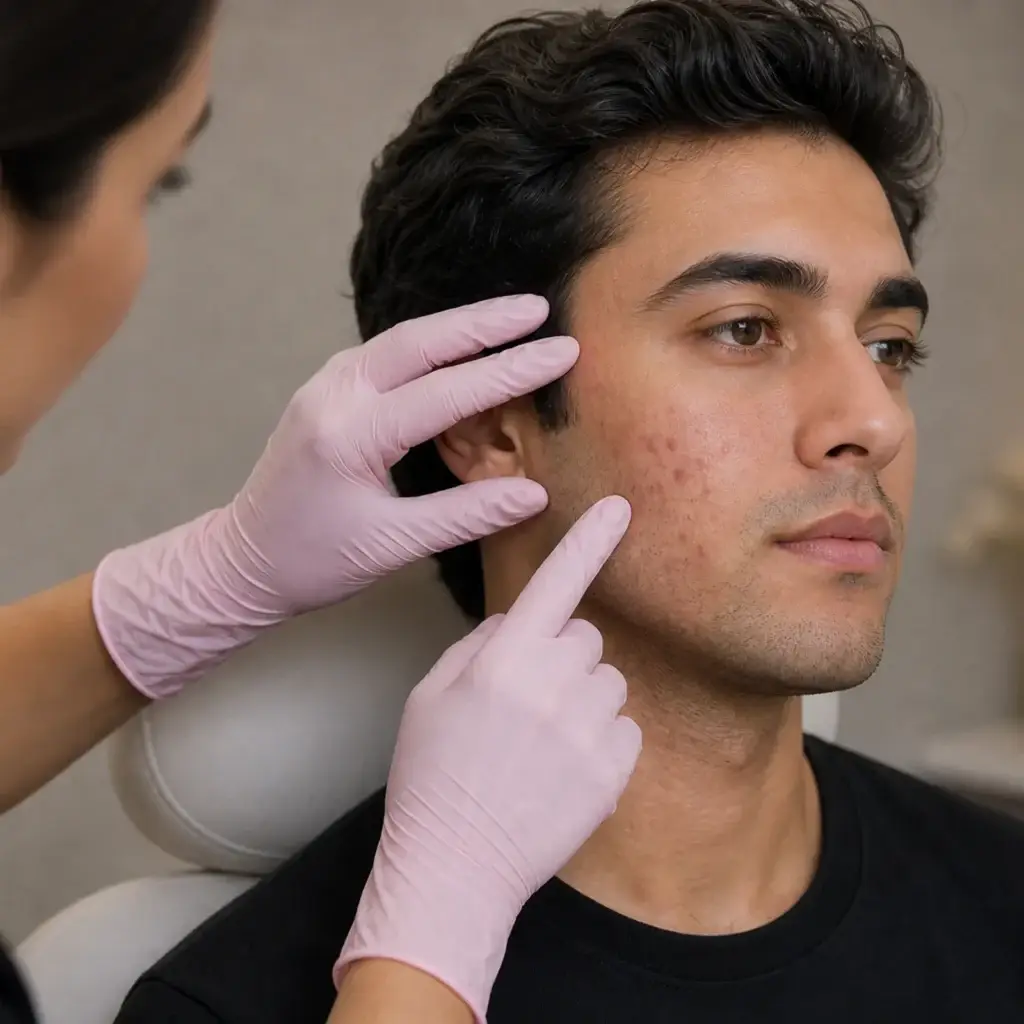
Quick answer
Active acne has different types and causes, and treatment is matched to yours rather than one-size-fits-all. Some acne is best managed medically, so assessment comes first; results build over time and skincare is part of the plan.
Acne Treatment at Volt Cartel
Acne treatment at Volt Cartel is built around a clinical assessment of the type, severity, and pattern of your acne rather than a fixed product protocol. Acne is a multifactorial condition — sebaceous activity, follicular hyperkeratinisation, bacterial colonisation, inflammation, and hormonal influence all play a role, and effective treatment requires addressing the drivers specific to each patient’s presentation rather than applying a standard approach.
At Volt Cartel, acne treatment combines medical-grade aesthetic procedures with guidance on skincare, routine, and when to involve a GP or dermatologist for systemic treatment. The clinic does not prescribe oral antibiotics or isotretinoin, but works within a clear referral framework where these are clinically indicated and complements ongoing medical management where it is already in place.
Treatments available include chemical peels, LED phototherapy, medical-grade topical preparation, Lumecca IPL for inflammatory component and post-acne redness, and skin consultation for patients who want a structured plan rather than a single treatment session.
What acne treatment can help with
Acne treatment at Volt Cartel may be suitable for patients with active comedonal or mild-to-moderate inflammatory acne, post-inflammatory redness or hyperpigmentation following breakouts, texture irregularity or superficial scarring from previous acne, or ongoing congestion that over-the-counter products have not resolved. Severe nodular or cystic acne with systemic involvement is typically best managed medically in the first instance, and your clinician will advise on the appropriate pathway where this applies.
How acne treatment is planned
At consultation, your clinician will assess your skin — including acne grade, distribution, predominant lesion type, skin sensitivity, and existing skincare routine — and discuss your treatment history, current products, diet, hormonal history, and any previous treatment responses. This informs which treatments are appropriate and in what sequence.
Where a course of treatment is recommended, sessions are typically spaced to allow the skin time to respond and recover. Chemical peels are usually scheduled two to four weeks apart; LED sessions can be weekly. The plan is reviewed as treatment progresses and adapted based on how the skin is responding.
Suitability, safety, and treatment intensity
Acne treatment suitability depends on the treatment chosen. Chemical peels are not suitable during active isotretinoin therapy or within six months of completing a course, and are not appropriate for patients with very inflamed active lesions where the skin barrier is compromised. IPL and laser-based treatments are assessed for Fitzpatrick skin type and the degree of active inflammation before proceeding. Pregnant patients are not treated with chemical peels, IPL, or LED at Volt Cartel.
Some acne presentations will benefit more from a GP or dermatology referral than from aesthetic treatment, and your clinician will say so rather than recommend a treatment course that is unlikely to meet your goal. The aim is to be genuinely useful rather than to proceed in every case. Suitability is confirmed at consultation, and your clinician will advise honestly if this treatment is not the most appropriate option for your concern.
What happens during acne treatment
The experience varies by the treatment chosen. Chemical peel appointments take 30 to 60 minutes; the skin is cleansed, the peel is applied for a specified dwell time depending on the formulation and skin response, then neutralised and followed by post-procedure care. LED phototherapy appointments take 20 to 30 minutes and involve no discomfort. IPL treatment for post-acne redness involves pulses of light to the affected areas and takes 30 to 45 minutes with mild heat sensation.
Aftercare is discussed in detail at each appointment and provided in writing. Post-peel aftercare includes sun avoidance, gentle cleansing, and avoiding active ingredients for the recovery period. Consistent adherence to aftercare significantly affects the outcome.
Results, courses, and maintenance
Acne treatment results accumulate over a course rather than appearing after a single session. Reduction in active breakouts, improvement in post-inflammatory marks, and improvement in skin texture are typically seen over a four to eight week course. Maintenance depends on the underlying drivers of the acne — patients with ongoing hormonal or dietary contributors will need a sustained approach rather than expecting a single course to produce indefinite results.
Your clinician will discuss a realistic expectation for your presentation at consultation so you understand what is achievable over what timeframe, and what ongoing management is likely to look like.
Pricing: Acne treatment pricing per session depends on the severity of your condition and the combination of technologies used. A full quote is provided at your consultation.
How Aesthetic Acne Treatment Compares to Medical Management
Aesthetic acne treatments address active acne, post-acne pigmentation, and sebum regulation through devices and topical protocols. These differ from GP-prescribed treatments in mechanism and appropriate patient profile.
| Aesthetic Acne Treatment (clinic) | Medical Management (GP or dermatologist) | |
|---|---|---|
| Approach | Lasers, peels, LED, and topical protocols to reduce sebum, inflammation, and bacteria | Topical or oral antibiotics, retinoids, or isotretinoin |
| Best for | Mild-to-moderate active acne; post-acne pigmentation and scarring; oily or congested skin | Moderate-to-severe active acne; cystic or nodular presentations; hormone-driven acne |
| Prescription needed | No | Yes |
For patients with mild-to-moderate acne, aesthetic treatment can reduce breakouts, improve skin texture, and address pigmentation. For more severe or cystic presentations, a GP or dermatology referral is often the appropriate first step — your clinician will say so honestly if that is a better fit for your presentation. Both approaches can be used in parallel once medical treatment is established.
Why choose Volt Cartel in Shoreditch
Volt Cartel approaches acne as a clinical skin concern, not a cosmetic inconvenience. The consultation is thorough, the treatment plan is adapted as results develop, and the clinic is honest about when an aesthetic approach is appropriate and when a GP or dermatologist should be involved. Patients are not pushed through a treatment course that is unlikely to address their specific presentation.
The clinic is in Shoreditch, East London. Acne consultations are available as standalone appointments for patients who want a clinical assessment and plan before committing to any treatment.

Doctor’s Note
Active acne is one of the areas where clinic treatment works best as a complement to medical management rather than a replacement for it. I always ask whether a patient has been assessed by a GP or dermatologist for systemic treatment, because moderate-to-severe inflammatory acne often needs topical or oral medication alongside any in-clinic work. For patients who are already well-managed medically, light-based and other treatments can significantly accelerate clearance and reduce scarring.
— Dr Nino Rionidze, Lead Doctor & Clinic Manager, Volt Cartel Shoreditch
Potential benefits
- ✓Clinical assessment of acne type, severity, and contributing triggers
- ✓Light-based and energy device options for active acne and inflammation
- ✓Addresses active breakouts alongside prevention of future scarring
- ✓Personalised plan combining in-clinic treatment with skincare guidance
- ✓Suitable for teenage acne through to adult-onset and hormonal breakouts
Concerns this treatment may be considered for
These links explain the concern in plain language. They do not confirm that this treatment is suitable for you.
What to expect
- Consultation and suitability assessment
- Review of goals, medical history, and previous treatments
- Treatment plan explained before anything is started
- Clinical photography or marking may be used where appropriate
- Treatment performed in a calm clinic setting
- Aftercare and review timing explained before you leave
Aftercare and downtime
- Use gentle skincare for the period advised
- Avoid active skincare until your clinician confirms it is suitable
- Wear high-factor SPF daily and avoid intentional sun exposure
- Do not pick, scrub, or exfoliate healing skin
- Follow the review and maintenance plan recommended for your skin
Questions about Acne Treatment London
What types of acne can be treated?
Volt Cartel can assess and treat all types of acne including comedonal acne (blackheads and whiteheads), inflammatory acne (papules and pustules), and moderate to severe acne in adults and older teenagers. Hormonal, stress-related, and lifestyle-driven acne can also be addressed within a clinical framework.
What treatments are used for active acne?
Active acne can be addressed with light-based treatments (including IPL and blue/red LED), medical-grade chemical peels, and personalised skincare protocols. For some patients, a referral for prescription topical or oral therapy may be recommended alongside in-clinic treatment.
How does IPL help with acne?
Lumecca IPL targets the bacteria associated with inflammatory acne (Propionibacterium acnes), which produces porphyrins that absorb specific wavelengths of light. Repeated exposure can reduce bacterial load and inflammation over a course of treatment. IPL also addresses redness and post-inflammatory marks.
How many sessions will I need?
The number of sessions depends on acne type, severity, and your response to treatment. A course of two to four sessions is typical for inflammatory acne. Ongoing maintenance sessions may be recommended to manage the condition and prevent recurrence. Your clinician will advise at consultation.
Can acne treatment also help with post-acne marks?
Yes. IPL and other light-based treatments address post-inflammatory erythema (red marks) and pigmentation left after breakouts. RF microneedling and other resurfacing approaches can also be considered for deeper post-acne marks once active breakouts are under control.
Is there downtime for acne treatment?
Downtime varies by treatment. IPL involves minimal downtime — some redness on the day and possible temporary darkening of post-acne marks. RF microneedling involves two to four days of redness. Chemical peels vary by strength. Your clinician will advise based on the planned protocol.
Can adult hormonal acne be treated?
Yes. Adult hormonal acne, particularly along the jawline and lower face, is a common presentation at Volt Cartel. It is assessed as part of the full acne consultation and addressed with an appropriate combination of in-clinic treatment and skincare, with referral for hormonal investigation or prescription treatment where indicated.
Will treatment affect my skin barrier?
Your skin barrier is assessed at consultation. Some acne-prone skin is also compromised in barrier function, which can make certain treatments less well tolerated. Your clinician will factor this into the treatment plan and skincare recommendations to ensure treatment supports rather than further disrupts the barrier.
What are the risks of acne treatment?
Risks depend on the treatment chosen. IPL carries a small risk of hyperpigmentation in darker skin types if settings are not calibrated carefully. Chemical peels and resurfacing treatments can cause temporary redness, sensitivity, and peeling. Your clinician explains all risks at consultation.
How much does acne treatment cost?
Acne treatment is planned around your skin, so the total depends on which treatments and how many sessions are involved. Guide prices are listed on our pricing page; after assessing your skin at consultation, your clinician confirms the exact cost before you commit to anything.
Discuss whether this treatment is suitable for you
A consultation reviews your goals, medical history, alternatives, realistic outcomes and the total cost before any treatment decision.