
Sagging or Loose Skin
Why is my skin becoming loose or sagging?
Sagging or loose skin — a loss of firmness and elasticity that causes the skin and underlying tissues to descend — is one of the most visible signs of ageing. At our doctor-led clinic in Shoreditch, London, Volt…
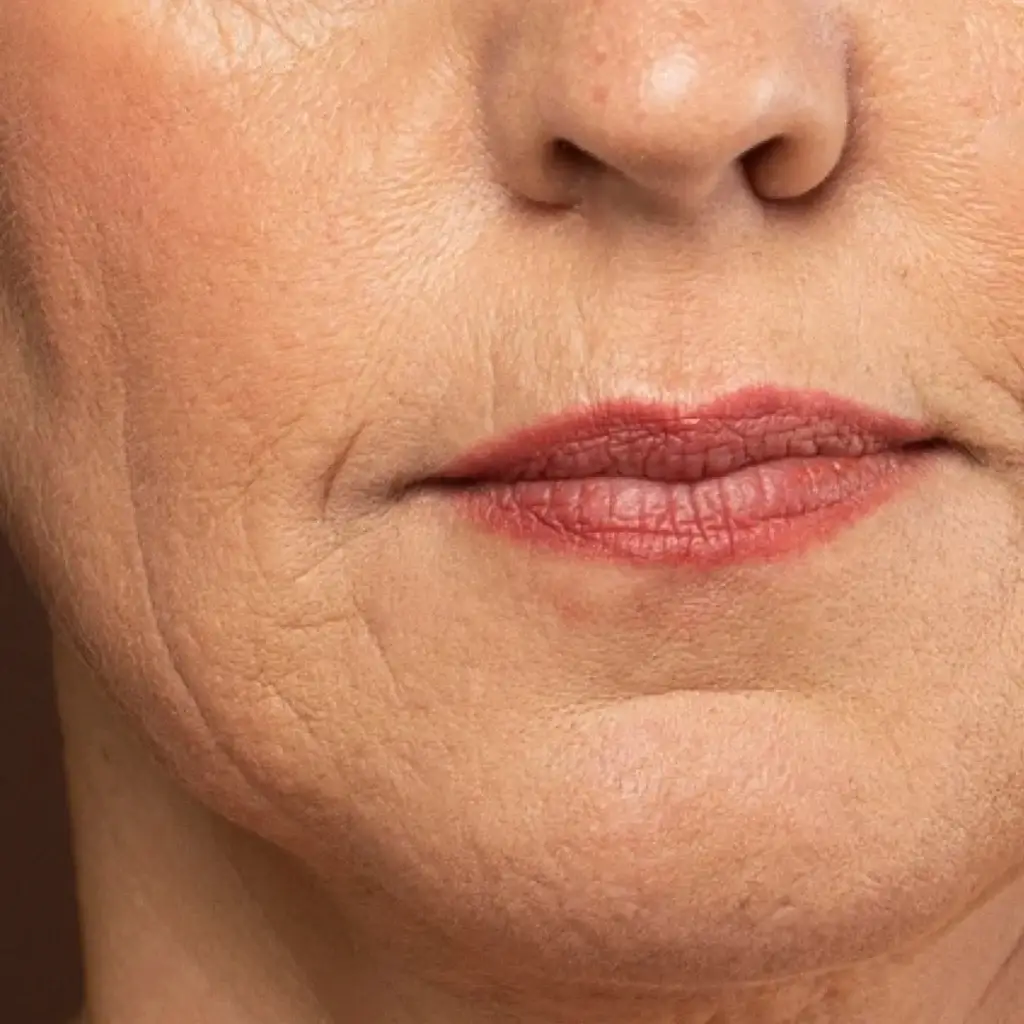
What Causes Sagging or Loose Skin?
Skin firmness depends on the integrity of collagen and elastin fibres within the dermis. Collagen provides structural support, while elastin allows the skin to return to its resting position after movement and stretching.
From our mid-twenties onwards, collagen production gradually declines. At the same time, facial retaining ligaments weaken and facial fat pads begin to descend under gravity. This contributes to jowls, heavier nasolabial folds, reduced jawline definition and loose neck skin.
UV exposure is one of the biggest accelerators of skin laxity. Significant weight loss, smoking, hormonal changes and genetics can also contribute to loose skin on both the face and body.
Types of Sagging or Loose Skin
Skin laxity affects different areas of the face and body. Identifying the primary area of concern helps guide treatment selection.
Jowls
Descended facial fat pads and ligament laxity create heaviness along the jawline, reducing facial definition and creating one of the most recognisable signs of ageing.
Neck Laxity
Loose, crepey skin beneath the jawline and neck can reduce profile definition and create an older appearance.
Cheek Descent
Downward movement of cheek fat pads contributes to deeper folds around the mouth and a heavier lower face appearance.
Eyelid & Brow Laxity
Loss of support around the eyes can contribute to hooding, heaviness and a tired appearance.
Body Skin Laxity
Loose skin affecting the abdomen, upper arms, thighs, knees or other areas, often following weight loss or pregnancy.
Generalised Skin Laxity
Diffuse loss of skin firmness across multiple facial or body areas, creating an overall softer and less structured appearance.
Why Choose Volt Cartel for Skin Tightening in London?
Skin laxity exists on a spectrum — from mild loss of definition in a patient in their early 30s to significant tissue descent in older patients. Our doctors assess the degree of laxity, skin quality, and the relative contribution of volume loss versus structural tissue change to determine which treatment or combination will produce meaningful improvement.
Morpheus8 RF microneedling delivers fractional radiofrequency energy at depths of up to 8mm, stimulating deep collagen and elastin remodelling — an effective non-surgical mechanism for tissue tightening. Forma RF is used for superficial laxity and as a maintenance protocol. CO2 laser addresses laxity alongside surface resurfacing.
Moderate-to-significant skin laxity responds best to combined treatment — Morpheus8 for deep structural remodelling combined with polynucleotides to improve the skin's regenerative capacity. We map the treatment course across multiple sessions rather than expecting a single appointment to address established laxity.
There is a threshold of skin laxity beyond which non-surgical treatment produces visible but limited improvement. We'll tell you honestly if surgical consultation would deliver a more appropriate result — some patients benefit from surgical correction followed by skin quality maintenance with devices.
Located at 86–90 Paul Street, EC2A 4NE — a short walk from Old Street, Liverpool Street, and Shoreditch High Street stations.
What to Expect From Skin Tightening Treatment
Your first step is a consultation with one of our doctors, where we assess the degree of laxity, the areas of concern, your skin's elasticity, and your overall treatment goals. We'll discuss whether a single treatment modality or a combined approach is most likely to deliver the results you're looking for.
Most skin tightening treatments — including Morpheus8 and Ultraformer HIFU — have minimal downtime. You may notice mild redness or swelling for one to three days following treatment. Results develop progressively as the body produces new collagen and elastin, with noticeable improvements typically visible at six to eight weeks and full results at three to six months.
For significant laxity, a course of two to three sessions is often recommended. Maintenance treatments once or twice per year can sustain results long-term, helping you maintain firmer, more youthful-looking skin without surgery.
Sources and review basis
Facial laxity and sagging can involve the epidermis, dermis, fat compartments, retaining structures and deeper anatomy. Peer-reviewed anatomical literature describes facial ageing as a combination of tissue change, redistribution and volume change, so consultation must assess the anatomy rather than promise a universal tightening result.
Treatments that may be considered
These are relevant routes, not recommendations. Suitability depends on assessment, medical history and the specific cause of the concern.
Questions people ask
Can non-surgical treatments really tighten skin?
Yes. Treatments such as Morpheus8 Burst stimulate collagen remodelling and tissue contraction, producing genuine improvements in skin firmness and support.
How long do skin-tightening results last?
Results continue improving for several months as collagen matures and typically last 12–24 months depending on age, lifestyle and the treatment performed.
How many treatments will I need?
Most patients benefit from a course of 2–3 Morpheus8 sessions, although recommendations vary according to the severity of laxity and treatment goals.
Is there downtime after skin tightening treatment?
Morpheus8 Burst typically involves a few days of redness and mild swelling. CO2 laser resurfacing requires a longer healing period.
How much does non-surgical skin tightening cost in London?
Skin tightening treatments at Volt Cartel start from £500 per session, depending on the technology used and the areas treated. HIFU and Morpheus8 packages are available and represent better value for patients requiring multiple sessions. Full pricing is provided after your consultation.
What is the difference between HIFU and Morpheus8 for skin tightening?
HIFU (High-Intensity Focused Ultrasound) targets the deep structural layers of the skin — similar to the layer addressed in a surgical facelift — making it particularly effective for facial lifting. Morpheus8 combines radiofrequency with microneedling to remodel collagen in the mid-layers, and may help with skin quality and tightening of the face, neck, and body.
At what age should I consider skin tightening treatment?
Skin tightening treatments can be beneficial from the late twenties onwards, particularly as a preventative measure against early laxity. However, they are most commonly sought by patients in their thirties, forties, and beyond. There is no upper age limit — the key factor is skin quality and overall health.
Can skin tightening be combined with other treatments?
Yes — skin tightening treatments work extremely well alongside dermal fillers to restore volume, polynucleotides to improve skin quality, and anti-wrinkle injections to relax muscles. Our doctors often recommend a combination approach tailored to your specific concerns and anatomy for the most natural-looking outcome.
Have the concern assessed properly
A consultation considers what you are seeing, possible causes, realistic options and whether any clinic treatment is appropriate — including none.