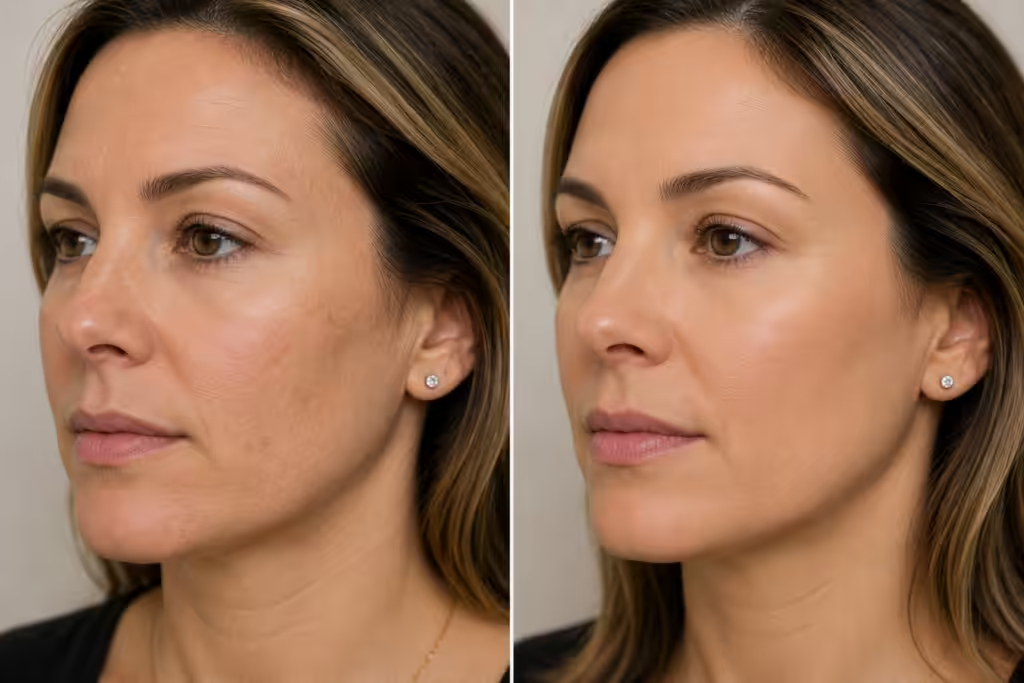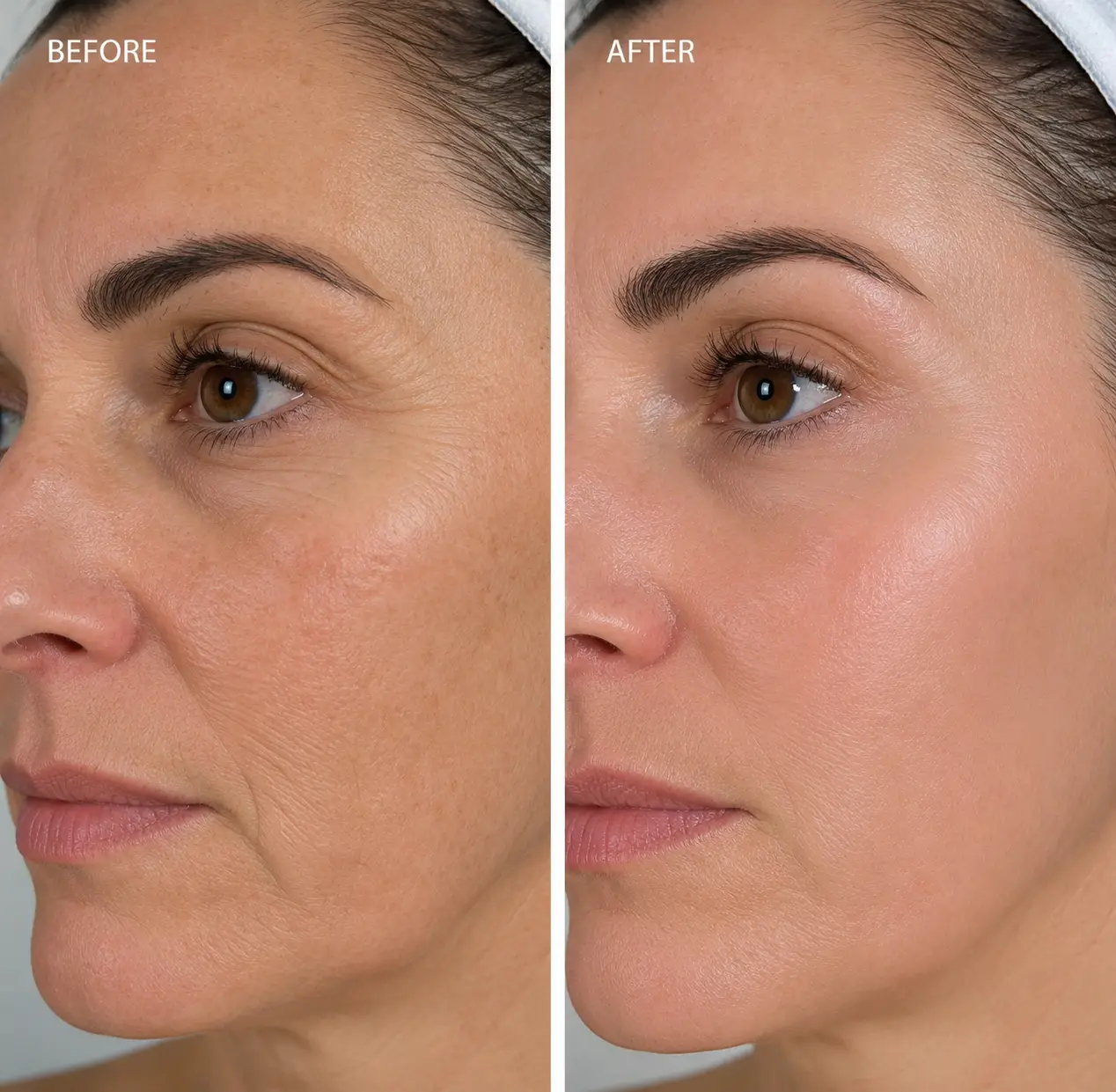
Quick answer
The Lumenis UltraPulse is an established CO₂ laser with fractional and ablative modes, often marketed as a “gold standard” — a phrase that reflects reputation, not a comparative trial result. This guide looks honestly at what the platform actually offers and where the evidence supports CO₂ resurfacing. Whether it suits you is a clinical decision.
The Lumenis UltraPulse CO₂ laser is an established ablative platform with fractional and fully ablative modes. It is often described in clinic marketing as a “gold standard,” but that phrase is not a comparative trial result. This guide examines what the platform actually offers, where the evidence supports CO₂ resurfacing, and where device specifications should not be mistaken for guaranteed superiority.
UltraPulse specifications include high peak power and short pulse delivery, which can support controlled ablation. Those engineering characteristics do not prove that no comparable platform or non-ablative plan can achieve an appropriate result. At Volt Cartel, the reason to use UltraPulse must be the patient’s scar pattern, photodamage, wrinkles, skin type, recovery tolerance and treatment goals — not the device name alone.
This guide covers how it works, what it treats, what recovery genuinely looks like, and who it’s right for.
Lumenis UltraPulse CO₂ at a Glance
- Manufacturer: Lumenis (Israel) — medical laser company with 50+ years of clinical history
- Technology: Fractional and fully ablative CO₂ laser (10,600 nm wavelength)
- Pulse delivery: Short, high-energy pulses for controlled ablation with limited heat spread
- Treatment modes: ActiveFX, DeepFX, TotalFX, SCAAR FX
- Treatment time: 30–90 minutes depending on area and mode
- Numbing: Topical + local anaesthetic; IV sedation for full-face aggressive treatment
- Recovery: Often days to weeks; mode, settings, area and individual healing change the timeline
- Sessions: Individual; some concerns require a series or multimodal scar plan
- Results begin: Visible at 2–4 weeks; full results at 3–6 months
- Best for: Deep acne scars, significant wrinkles, sun damage, surgical scars, overall skin resurfacing
Table of Contents
- What Is CO₂ Laser Resurfacing?
- Why “UltraPulse”? What Makes It Different?
- UltraPulse Treatment Modes Explained
- What Can Lumenis UltraPulse CO₂ Treat?
- UltraPulse CO₂ vs. Other Resurfacing Technologies
- What to Expect at Volt Cartel
- Recovery Timeline
- Results — What’s Realistic
- Who Is a Good Candidate?
- Who Is Not Suitable?
- Side Effects and Risks
- UltraPulse CO₂ Cost in London (2026)
- Why Choose Volt Cartel for UltraPulse CO₂?
- Doctor’s Note
- Related Treatments
- Book a Consultation at Volt Cartel Shoreditch
What Is CO₂ Laser Resurfacing?
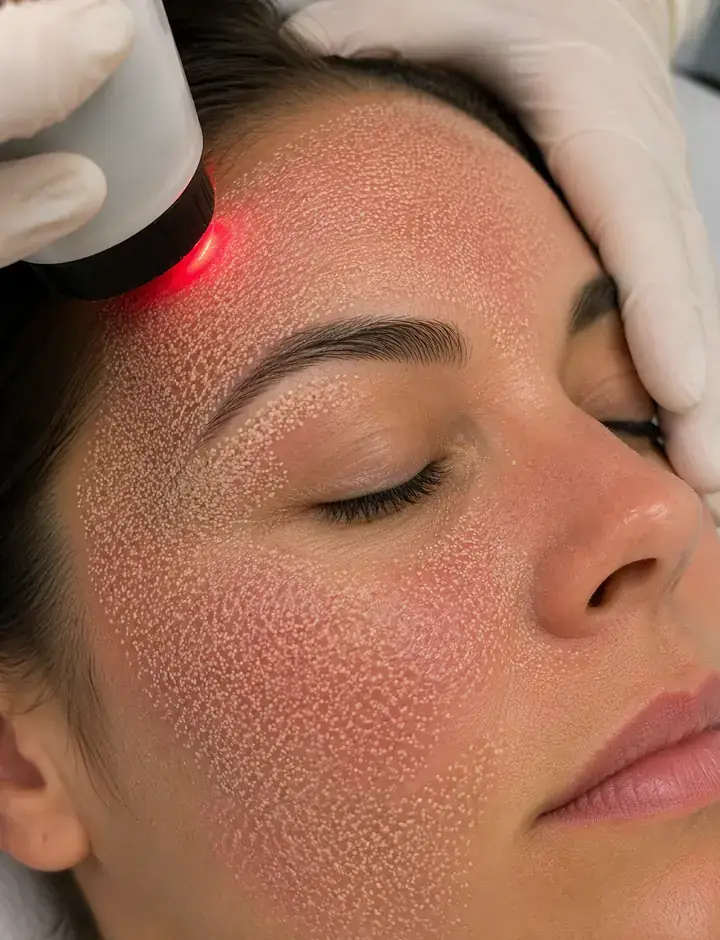
CO₂ (carbon dioxide) laser operates at a wavelength of 10,600 nanometres — strongly absorbed by water in skin cells. When the laser beam hits skin tissue, water within the cells absorbs the energy and vaporises, ablating (removing) a controlled layer of skin. This dual process — ablation of the surface layer and coagulation of the underlying dermis — triggers a comprehensive wound-healing response that produces new collagen, elastin, and healthy skin cells.
How the skin contracts and tightens
The heat that drives resurfacing also acts on collagen. As the laser vaporises microscopic columns of surface tissue, it deposits heat in the surrounding dermis, and that heat makes existing collagen contract almost immediately — a tightening effect that can be visible early on. Over the following weeks and months, the controlled injury prompts the skin to build new, better-organised collagen and elastin, which continues to firm and improve skin quality after the surface has healed. It is why CO₂ resurfacing does more than smooth the surface — though the degree of tightening is modest next to treatments that target laxity directly, and it varies from person to person.
CO₂ laser resurfacing has a substantial clinical literature. Continuous-wave and ablative delivery can create thermal injury as well as intended ablation, which is why pulse characteristics, density, passes, skin type and aftercare matter. UltraPulse uses short-pulse delivery intended to limit unnecessary heat spread, but it does not eliminate thermal injury, scarring or pigment risk.
Why “UltraPulse”? What Makes It Different?
The “Ultra” in UltraPulse refers to the pulse duration — extremely short, high-peak-power bursts of laser energy. Where a standard continuous CO₂ laser heats tissue progressively (risking thermal damage), the UltraPulse delivers energy so rapidly that ablation occurs before the heat can dissipate laterally into surrounding tissue.
This is the core technical advantage:
- High-energy short pulses: energy is delivered faster than it spreads as heat, so ablation happens before heat diffuses into surrounding tissue — the basis of its controlled, low-char resurfacing. Specifications alone do not guarantee a better outcome.
- Short-pulse delivery: intended to control heat spread during ablation; thermal injury, prolonged healing and scarring remain possible.
- Configurable tissue treatment: pulse, density, pattern and passes can be selected by the doctor, while tissue response and healing remain biologically variable.
- Multiple treatment modes: From gentle fractional resurfacing (ActiveFX) to aggressive full-surface ablation — the same device covers the full spectrum of clinical need.
In practical terms: the UltraPulse can achieve the same depth of resurfacing as standard CO₂ lasers with less collateral damage — producing equivalent results with a safer, more controlled treatment profile.
UltraPulse Treatment Modes Explained
ActiveFX — Fractional Surface Resurfacing
ActiveFX treats the surface in a fractional pattern, leaving intervening tissue untreated. It may be considered for selected photodamage, fine lines and texture concerns. A 5–7 day visible-recovery estimate can be useful for planning, but healing and pigment changes can last longer and the mode is not downtime-free.
DeepFX — Fractional Deep Treatment
DeepFX uses a smaller spot size to create deeper fractional treatment columns. It may be considered for selected acne scars, deeper wrinkles and texture concerns. Recovery is often measured in days, but a 7–10 day estimate is not a guarantee and prolonged redness or pigment change can occur.
TotalFX — Combined Surface and Deep Treatment
TotalFX combines ActiveFX and DeepFX to address surface and deeper targets in one plan. It is a broader UltraPulse fractional approach, not automatically the “maximum” or correct choice. Density, depth, risk and recovery tolerance must justify combining modes, and healing varies.
SCAAR FX — Deep Scar Treatment
SCAAR FX is a specialised deep fractional mode for selected scars. Scar morphology matters: rolling, boxcar and ice-pick scars do not respond identically, and subcision, TCA CROSS or another modality may be needed. The mode expands UltraPulse planning options, but comparative evidence does not establish that it reaches a clinically superior outcome to every alternative.
What Can Lumenis UltraPulse CO₂ Treat?
- Acne scarring — fractional CO₂ is an established option, but the correct intervention depends on scar morphology, skin type, previous treatment and PIH risk. SCAAR FX is one possible mode, not a universal first choice.
- Fine lines and wrinkles — perioral lines (around the mouth), crow’s feet, forehead lines, and neck lines all respond well to CO₂ resurfacing.
- Deep wrinkles — for patients with significant dermal wrinkling, UltraPulse’s ablative capability produces improvement that non-ablative devices cannot match.
- Sun damage and photodamage — removes damaged surface cells and stimulates replacement with healthier tissue.
- Pigmentation — surface pigment lesions (solar lentigines, seborrhoeic keratoses) respond well to ablative resurfacing.
- Skin texture and roughness — comprehensive surface renewal produces a noticeable improvement in overall skin quality.
- Surgical scars — resurfacing and SCAAR FX mode can significantly improve the appearance of established surgical and traumatic scars.
- Mild-to-moderate skin laxity — the coagulation effect of CO₂ laser produces secondary tightening alongside resurfacing.
- Sebaceous hyperplasia, milia, and benign skin lesions — the UltraPulse can treat individual lesions with precision.
UltraPulse CO₂ vs. Other Resurfacing Technologies
| UltraPulse CO₂ | Morpheus8 | Standard Fractional CO₂ | Lumecca IPL | |
|---|---|---|---|---|
| Technology | Ablative CO₂ laser | RF microneedling | Ablative CO₂ laser | Intense pulsed light |
| Depth of action | Surface + deep dermis | Dermis + subdermal | Surface + mid dermis | Epidermis only |
| Acne scarring | Established ablative option | Excellent | Good | Not indicated |
| Skin tightening | Good (secondary) | Excellent (primary) | Moderate | Minimal |
| Pigmentation | Good | Not indicated | Moderate | Excellent |
| Downtime | 5–21 days | 3–7 days | 5–10 days | Minimal |
| Sessions | 1–2 | 3 | 1–3 | 3 |
| Darker skin tones | Caution required | Safe (IV–VI) | Moderate caution | Caution required |
| Result magnitude | Potentially substantial; individual and indication-dependent | High | Moderate–high | Moderate (pigment focus) |
What to Expect at Volt Cartel
Consultation
UltraPulse CO₂ is a significant treatment — the consultation is thorough. We assess your skin type (Fitzpatrick scale), degree of photodamage or scarring, any relevant medical history, and your goals and expectations. We discuss the appropriate treatment mode, depth, and post-treatment care in detail. Patients on certain medications, those who have recently used isotretinoin, or those with darker skin tones require particular assessment before we proceed.
Preparation
Depending on your skin type, we may recommend a pre-treatment skincare preparation phase — typically 4–6 weeks using topical retinoids, vitamin C, and SPF. This primes the skin for treatment and reduces the risk of post-inflammatory hyperpigmentation in higher Fitzpatrick types. We’ll discuss a pre-treatment protocol specific to your skin at consultation.
On the Day
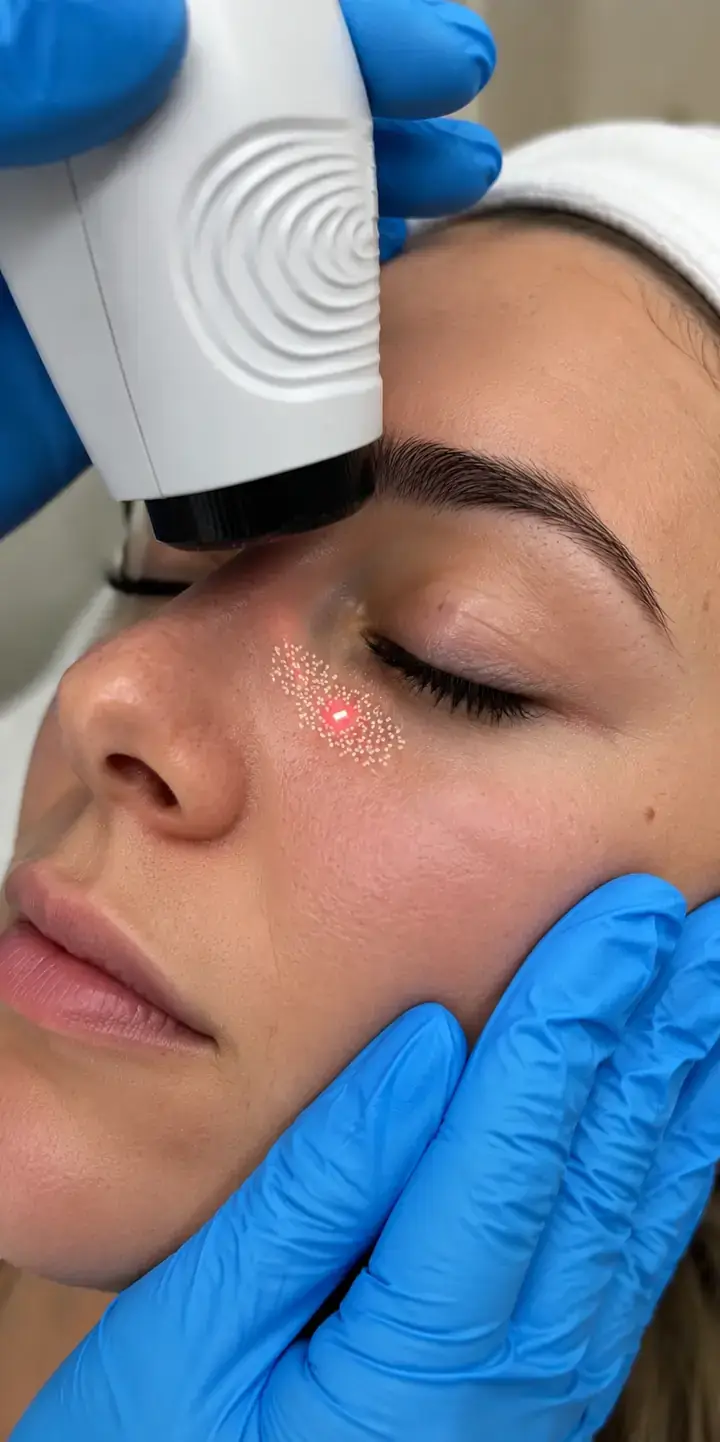
Topical numbing cream is applied 45–60 minutes before treatment. For more aggressive full-surface treatment, local anaesthetic may be administered. The treatment itself is delivered in passes over the skin — the number and depth of passes determines the degree of resurfacing. Most fractional treatments take 30–60 minutes; full-surface treatment of the face takes longer.
Immediately After
Skin will be red, swollen, and raw immediately after treatment — similar in appearance to a sunburn for mild settings, more significant for aggressive treatment. Crusting develops as the ablated surface heals. This is a normal part of the healing process. We provide detailed written aftercare instructions and a post-procedure skincare kit.
Recovery Timeline
| Timeframe | Fractional (TotalFX/DeepFX) | Aggressive / Full Ablative |
|---|---|---|
| Days 1–2 | Redness, swelling, raw feeling | Significant swelling, weeping, raw skin surface |
| Days 3–5 | Crusting; skin feels tight | Crusting; skin peeling begins |
| Days 5–7 | Crusts shed; pink new skin underneath | Crusts shedding; significant erythema |
| Week 2 | Social acceptability for most patients; residual pink | Pink/red, makeup can cover; not yet comfortable for all |
| Weeks 2–4 | Redness continues to fade; skin quality improving | Continued healing; redness fades over 4–8 weeks |
| Month 2–3 | Significant improvement visible; texture, tone, scars | Major improvement visible; continued remodelling |
| Month 3–6 | Full results; collagen maturation complete | Full results; ongoing improvement possible up to 12 months |

Results — What’s Realistic
UltraPulse CO₂ produces the most significant non-surgical skin improvement available — but the degree of improvement depends on the concern being treated, the settings used, and how the skin heals.
Realistic outcomes after a TotalFX or DeepFX session:
- Significant reduction in moderate acne scarring — particularly rolling and boxcar types
- Visible reduction in fine-to-medium wrinkles; deeper wrinkles improved but rarely eliminated
- Marked improvement in skin texture, tone, and overall quality
- Pigmentation reduction — particularly solar lentigines and areas of photodamage
- Secondary skin tightening from collagen coagulation
With SCAAR FX for established scarring:
- Clinically significant reduction in scar depth and definition
- Response varies by scar morphology; rolling and boxcar scars may respond differently from ice-pick, surgical and traumatic scars
- Ice pick scars respond, though may require combination with TCA CROSS for optimal results
- Session count is individual; some scars require more than one modality rather than repeated laser alone
Structural scar or texture improvement can persist, while ageing, sun exposure and the underlying scar pattern continue to affect appearance. Evidence does not support a universal multi-year duration or the claim that maintenance is never relevant.
Want to know if UltraPulse CO₂ is right for your skin?
Book a consultation at Volt Cartel Shoreditch — we’ll assess your skin and give you an honest recommendation. Book now or WhatsApp us.
Who Is a Good Candidate?
UltraPulse CO₂ is best suited to patients who have a genuine resurfacing concern — significant acne scarring, established photodamage, deep wrinkles, or skin quality concerns that have not responded adequately to lighter treatments. It’s not the right starting point for mild concerns where less aggressive options will suffice.
Ideal candidates:
- Fitzpatrick types I–III (lighter skin tones) — standard and aggressive treatment
- Fitzpatrick types IV–VI — possible with appropriate assessment and conservative settings; higher risk of PIH requires careful management
- Patients who can commit to the recovery period — downtime is real and cannot be significantly shortened
- Patients with realistic expectations — a noticeable improvement, not perfection
- Non-smokers or patients willing to stop smoking (smoking significantly impairs healing)
Who Is Not Suitable?
- Active acne, skin infection, or open wounds in the treatment area
- Current or recent isotretinoin (Roaccutane) use — disclose this at consultation. Consensus does not support a blanket 12-month delay for every fractional ablative procedure, while fully ablative laser remains a separate concern; the decision must be individual
- History of keloid or hypertrophic scarring
- Pregnant or breastfeeding
- Active cold sore history without antiviral prophylaxis — CO₂ resurfacing can trigger HSV-1 reactivation; we prescribe antivirals as a precautionary measure where relevant
- Certain autoimmune conditions or immunosuppressive medications — assessed case by case
- Unrealistic expectations or patients unable to commit to post-treatment care requirements
Side Effects and Risks
Expected (normal part of healing):
- Redness, swelling, and crusting — duration depends on treatment intensity
- Skin tightness and sensitivity during the healing phase
- Prolonged erythema (pinkness) — can persist for weeks after aggressive treatment; camouflage makeup covers once surface is healed
Uncommon:
- Post-inflammatory hyperpigmentation — more common in darker skin tones; risk reduced with appropriate pre-treatment preparation and conservative settings
- Infection — rare when aftercare is followed correctly; antiviral cover is prescribed where relevant
- Delayed healing — more common in smokers and patients with compromised healing
- Prolonged erythema beyond expected duration — rare with UltraPulse’s ultrashort pulse technology; more associated with older continuous-wave CO₂ systems
Very rare:
- Scarring — extremely rare when treatment is performed by a trained clinician at appropriate settings on a suitable patient
- Persistent hypo- or hyperpigmentation — risk varies with mode, settings, skin type, inflammation, sun exposure and aftercare; fractional treatment does not reduce the risk to zero
UltraPulse CO₂ Cost in London (2026)
UltraPulse CO₂ laser resurfacing is priced based on the treatment area and mode used. In London, single-session TotalFX or DeepFX facial treatment typically ranges from £1,200–£2,500 at established clinics. SCAAR FX for scar treatment may be priced separately and depends on the size and density of the area treated.
For Volt Cartel’s current pricing, visit our UltraPulse CO₂ treatment page or contact us directly to discuss your specific case.
Why Choose Volt Cartel for UltraPulse CO₂?
- The device and protocol both matter. We name the Lumenis UltraPulse and the mode being proposed rather than using “CO₂ laser” as a vague label. Specifications, practitioner judgement, settings, selection, consent and aftercare all contribute to risk and outcome.
- Doctor-led. UltraPulse CO₂ is a medical procedure, not a beauty treatment. At Volt Cartel, it is performed by Dr. Nino Rionidze or one of our qualified medical doctors — not a technician. Clinical judgement during treatment (adjusting passes, depth, energy based on real-time tissue response) is not something that can be delegated to a non-medical operator.
- Honest assessment. If your concern doesn’t warrant CO₂ laser — if Morpheus8, chemical peels, or another approach would serve you better with less downtime — we’ll tell you. We don’t recommend the most aggressive treatment by default.
- Combination planning with a reason. CO₂ laser may be sequenced with Morpheus8, polynucleotides or injectables only when a separate concern and credible rationale justify each step; combinations are not automatically superior.
Doctor’s Note
“CO₂ laser is an option I discuss when significant scarring or photodamage genuinely warrants ablative resurfacing. UltraPulse gives us a broad range of modes and settings, but specifications do not replace patient selection. I am clear about healing, pigment risk, aftercare and the possibility of partial rather than complete improvement. It is not the right treatment for every patient.”
Dr. Nino Rionidze, Volt Cartel Shoreditch
Frequently Asked Questions
Is UltraPulse CO₂ the same as standard CO₂ laser resurfacing?
UltraPulse is a specific CO₂ platform with configurable fractional and ablative modes, high peak-power capability and short-pulse delivery. Those specifications influence how energy can be delivered but do not prove more effective ablation or less collateral injury in every clinical comparison. Ask which mode, settings, operator and aftercare plan are proposed.
How many sessions do I need?
Session count depends on scar type, area, mode, settings, healing and the acceptable risk–recovery balance. Some patients may have one session, while others need staged laser or a multimodal scar plan. RF microneedling also has no universal three-session requirement, so session counts should not be used as a blanket superiority claim.
What is the recovery like honestly?
Honest answer: more demanding than most non-ablative treatments. The first few days involve genuine discomfort — redness, crusting, skin that looks and feels raw. By day 7–10, most patients look socially acceptable with makeup. The pink tone can persist for 4–8 weeks after aggressive treatment. You need to be prepared for this and follow aftercare instructions carefully. Patients who have had UltraPulse treatment almost universally say the results justified the recovery — but the recovery is real.
Can CO₂ laser be done on darker skin tones?
Yes, with appropriate precautions. Fitzpatrick types IV–VI carry higher risk of post-inflammatory hyperpigmentation from ablative laser — but this risk is manageable with pre-treatment preparation (typically topical agents over 4–6 weeks), conservative settings, and careful post-treatment management. We assess darker skin tone patients carefully and will only proceed if we are confident the risk/benefit balance is appropriate. In some cases, Morpheus8 may be a safer primary option.
What’s the difference between UltraPulse and Fraxel?
Fraxel refers to non-ablative fractional wavelengths, while UltraPulse CO₂ is ablative. They create different tissue effects and recovery profiles. Non-ablative treatment commonly involves less visible recovery, but the amount of improvement cannot be ranked without the indication, protocol, skin type and outcome being measured.
Does CO₂ laser hurt?
Topical numbing cream is applied before treatment and significantly reduces discomfort. For deeper or more extensive treatment, local anaesthetic may be used. During treatment, patients typically feel heat and some pressure. The post-treatment period (days 1–3) involves genuine tenderness — managed with appropriate aftercare and where necessary, mild analgesics.
How long do results from UltraPulse CO₂ last?
Results are long-lasting — CO₂ resurfacing produces structural change in the skin that is not quickly reversed. Skin quality, texture, and scar improvement from a well-executed treatment typically lasts many years. The ageing process continues, so some patients choose a single maintenance session after 3–5 years. This is very different from treatments that require regular sessions to sustain results.
Can UltraPulse CO₂ be combined with other treatments?
UltraPulse can be combined or sequenced with other treatments when separate concerns justify each step. CO₂ is not automatically the “foundation,” and adding polynucleotides, skin boosters or Morpheus8 does not guarantee a superior outcome. Full healing, evidence, risk and timing are reviewed at consultation.
Will I need antiviral medication?
If you have a history of cold sores (HSV-1), yes — CO₂ laser resurfacing can trigger reactivation. We prescribe antiviral prophylaxis as a precautionary measure for any patient with a relevant history. Please disclose this at consultation.
What aftercare is required?
Thorough aftercare is essential for optimal healing. We provide a written protocol and a post-procedure skincare kit at the time of treatment. The core principles: keep skin moisturised and protected during healing; avoid sun exposure for a minimum of 4 weeks; use SPF 50 daily once healed; do not pick or remove crusts; avoid active skincare ingredients (acids, retinoids, vitamin C) until the skin has fully healed. We contact patients during the recovery period to check on progress and address any questions.
Is UltraPulse CO₂ worth it?
UltraPulse may be worth the cost and recovery when the concern genuinely warrants ablative resurfacing and the likely benefit exceeds the risks and alternatives. It is not unambiguously right for everyone, and non-ablative options should not be dismissed categorically. A useful consultation compares expected scale of change, scar type, PIH risk, recovery and total treatment plan.
Key Takeaways
- “Gold standard” is a reputation claim, not a comparative clinical verdict. UltraPulse offers multiple modes, high peak-power capability and short-pulse delivery; those features do not guarantee superiority.
- Multiple treatment modes (ActiveFX, DeepFX, TotalFX and SCAAR FX) support different targets, while no one platform or mode appropriately addresses every scar or pigmentation concern.
- Session count is individual. Some patients may have one session; others need staged laser or a multimodal scar plan. Fixed comparisons with RF microneedling are not reliable.
- Recovery is real and variable. Visible healing often takes days to weeks, with longer redness or pigment change possible. Aftercare supports risk management but cannot guarantee outcome.
- For patients who genuinely need ablative resurfacing, UltraPulse is one established option. Its role should be justified against other ablative, non-ablative, needling-based and surgical approaches.
Related Treatments
- CO₂ Laser Resurfacing — our broader CO₂ treatment page
- Morpheus8 — RF microneedling for scarring and skin tightening with shorter downtime
- Morpheus8 Burst — broader RF microneedling application including body
- Lumecca IPL — for pigmentation and redness alongside structural improvement
- Polynucleotides — regenerative skin quality treatment; excellent post-laser adjunct
Book a Consultation at Volt Cartel Shoreditch
UltraPulse CO₂ laser is a treatment that deserves proper assessment before it’s recommended. If you’re considering it — for acne scarring, significant photodamage, or skin resurfacing — the right starting point is a consultation with one of our doctors. We’ll assess your skin, discuss the appropriate treatment mode, and give you an honest view of what to expect.
Volt Cartel is located at Ground Floor, 86–90 Paul Street, Shoreditch, London EC2A 4NE — a short walk from Old Street, Liverpool Street, and Shoreditch High Street stations.
Book a Consultation | WhatsApp Us
Always consult a qualified medical or aesthetic professional before undergoing any treatment. Individual results vary.
References
- Zhang DD, et al. The efficacy of fractional CO₂ laser in acne scar treatment: a meta-analysis. Dermatol Ther. 2021;34:e14539. Eight studies found no significant difference from non-CO₂ laser therapies for several improvement and PIH outcomes. PMID 33190373.
- Li J, et al. Efficacy and adverse reactions of fractional CO₂ laser for atrophic acne scars: a retrospective study on 121 patients. J Cosmet Dermatol. 2022. PMID 35181995.
- Spring LK, et al. Isotretinoin and Timing of Procedural Interventions: A Systematic Review With Consensus Recommendations. JAMA Dermatol. 2017;153(8):802–809. PMID 28658462.
- US Food and Drug Administration. UltraPulse system with DeepFX/SCAAR FX, 510(k) K211362. The clearance describes device applications; it does not establish universal outcome superiority. FDA 510(k) record.
- Manstein D, Herron GS, Sink RK, et al. Fractional Photothermolysis: A New Concept for Cutaneous Remodeling Using Microscopic Patterns of Thermal Injury. Lasers Surg Med. 2004;34(5):426–438. [PubMed]
- Laubach HJ, Tannous Z, Anderson RR, Manstein D. Skin Responses to Fractional Photothermolysis. Lasers Surg Med. 2006;38(2):142–149. [PubMed]
- Alexiades-Armenakas MR, Dover JS, Arndt KA. The Spectrum of Laser Skin Resurfacing: Nonablative, Fractional, and Ablative Laser Resurfacing. J Am Acad Dermatol. 2008;58(5):719–737. [PubMed]
- Geronemus RG. Fractional Photothermolysis: Current and Future Applications. Lasers Surg Med. 2006;38(3):169–176. [PubMed]
- Varani J, Dame MK, Rittie L, et al. Decreased Collagen Production in Chronologically Aged Skin. Am J Pathol. 2006;168(6):1861–1868. [PubMed]
- Fisher GJ, Varani J, Voorhees JJ. Looking Older: Fibroblast Collapse and Therapeutic Implications. Arch Dermatol. 2008;144(5):666–672. [PubMed]
Always consult a qualified medical or aesthetic professional before undergoing any treatment. Individual results vary.
Frequently asked questions
What is the Lumenis UltraPulse CO2 laser used for?
It is an ablative CO2 laser platform used to support skin resurfacing for texture, scarring, sun damage and fine lines, typically with more downtime than gentler options. What it can realistically achieve for you depends on your skin and is assessed first.
What downtime and risks should I expect?
Ablative resurfacing usually involves a recovery period with redness, swelling and peeling as the skin heals, and the intensity is set to suit your skin. Suitability, aftercare and risks, including pigmentation considerations, are discussed before treatment.
How much does CO2 laser resurfacing cost?
Cost depends on the area and treatment plan, so a guide price is given at consultation. See our pricing for indicative figures.