
Quick answer
Morpheus8 and Forma RF are radiofrequency (RF) skin treatments from the same device family, but they are not really rivals. Morpheus8 is RF microneedling — fine needles deliver heat into the deeper skin to remodel it, and it is more intensive with some downtime. Forma RF is a non-needling surface treatment that gently heats and tightens the skin gradually, with little to no downtime. They are often used together rather than instead of each other, and the right choice is decided at a consultation. As a guide, Morpheus8 at Volt Cartel is from £395 per session for a small area up to £895 for face, neck and décolletage (courses of three from £995); Forma RF is offered as a course with guide prices confirmed at your consultation.
Morpheus8 and Forma RF are two of the most-searched skin-tightening options in London, and because they come from the same InMode device family they are constantly confused for one another. They work in genuinely different ways, suit different situations, and are sometimes combined as part of one plan. Here is an honest comparison to help you understand the difference — the right choice for you, if either is appropriate, is decided after a clinical assessment, not from a search result.
The short version
Morpheus8 is RF microneedling: fine needles deliver radiofrequency energy into the deeper layers of the skin to remodel it, which is why it is the more intensive of the two and usually involves some downtime. Forma RF is a non-needling RF treatment applied to the surface of the skin to gently heat and tighten it over a course of sessions, with little or minimal downtime. One is deeper and more intensive; the other is gentler and more gradual. Neither is a substitute for surgery, both build results gradually, and neither is permanent.
How Morpheus8 works
Morpheus8 combines microneedling with radiofrequency. An array of fine needles passes into the skin and delivers heat at a controlled depth, with the aim of stimulating the skin’s own remodelling in the deeper layers. Because it is a needling treatment, numbing is used for comfort, and it is normal to have some redness, minor swelling or small marks afterwards for a short recovery period. It is generally the more intensive option and is chosen when a deeper, more remodelling approach is appropriate. How many sessions you might need, and how they are spaced, is individual and decided at assessment.
How Forma RF works
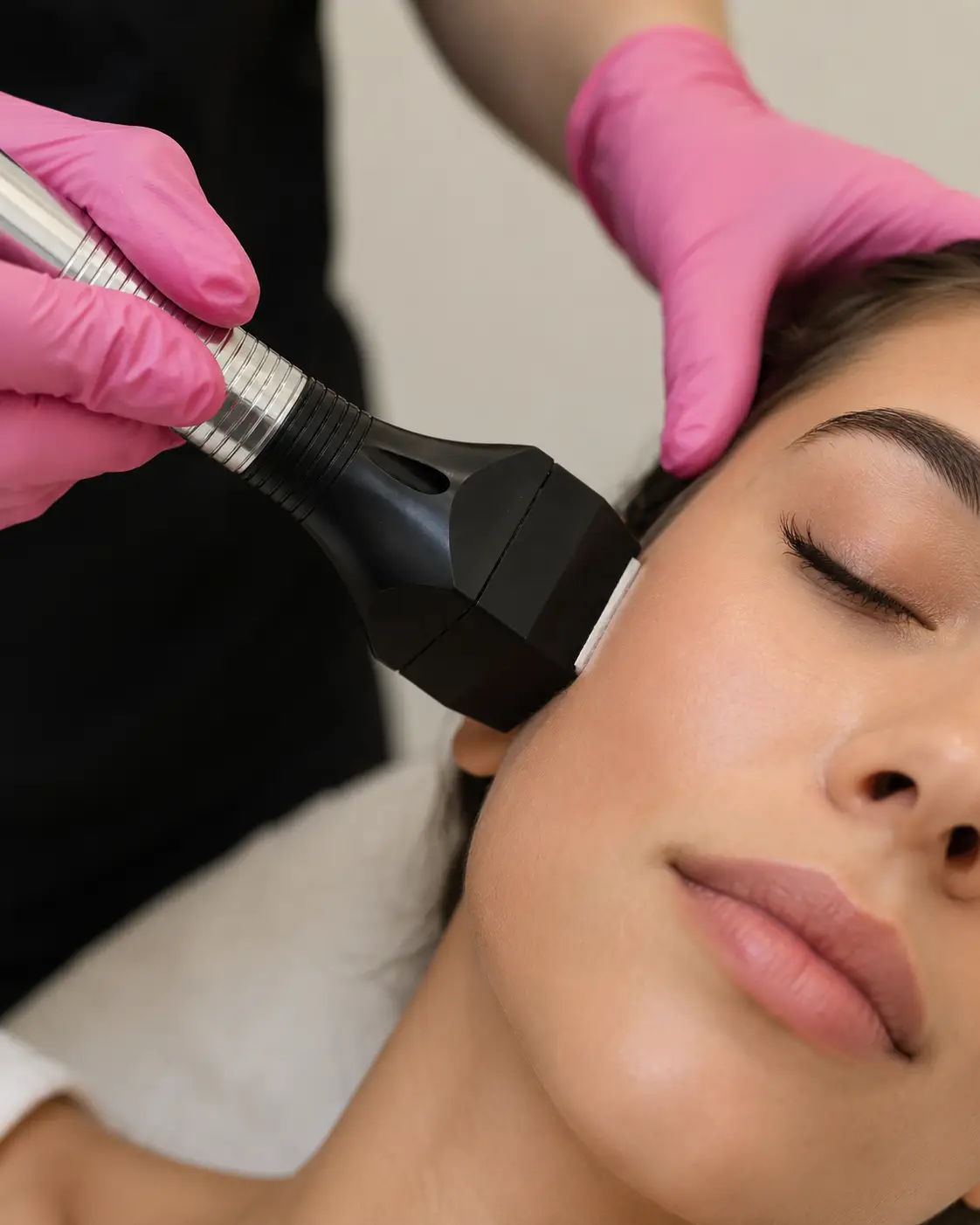
Forma RF uses radiofrequency without needles. A handpiece is moved over the surface of the skin to warm it in a controlled way, with the aim of gently tightening and improving skin quality over time. It is typically given as a series of sessions and is usually comfortable, with little to no downtime, which makes it well suited to gradual, low-disruption maintenance. Because the effect is gentler and cumulative, patience and a course are part of the approach rather than a single dramatic session.
How they differ
- Depth and intensity. Morpheus8 works deeper and is more intensive; Forma RF is a gentler surface treatment.
- Downtime. Morpheus8 usually involves some redness and a short recovery; Forma RF typically has little to none.
- Course. Forma RF is often given as a series of sessions; Morpheus8 may need fewer, spaced further apart. Your plan is individual.
- Comfort. Because Morpheus8 uses needles, numbing is used; Forma RF is generally comfortable without it.
- Best role. Morpheus8 suits a more intensive, deeper treatment when that is appropriate; Forma RF suits gradual, comfortable maintenance with minimal downtime.
Morpheus8 vs Forma RF: a side-by-side comparison
| Morpheus8 | Forma RF | |
|---|---|---|
| Mechanism | RF microneedling — fine needles deliver radiofrequency into the deeper skin | Non-invasive surface RF — controlled heating applied to the skin, no needles |
| Needles | Yes (numbing used) | No |
| Downtime | Some redness and short recovery is common | Little to none |
| Intensity | Deeper, more intensive | Gentler, more gradual |
| What it targets | Skin firmness and quality, deeper remodelling where appropriate | Skin firmness and quality, gradual tightening and maintenance |
| Typical course | May need fewer sessions, spaced further apart (individual) | Often a series of sessions (individual) |
| Longevity | Builds gradually; not permanent, maintenance may be discussed | Builds gradually; not permanent, maintenance may be discussed |
| Guide price | From £395 per session (small area) up to £895 (face + neck + décolletage); courses of 3 from £995 | Offered as a course; guide prices confirmed at your consultation |
Prices are guide prices confirmed at consultation and only where treatment is appropriate. The table is a starting point for understanding the difference, not a recommendation — which option suits you, if either, is decided after an assessment.
Which is right for me?
It depends on your skin, your concern and how much downtime suits your life — and sometimes the honest answer is a combination rather than one or the other. Some considerations also differ by skin tone, which a responsible clinician factors into any recommendation, device choice and settings. Neither treatment is a substitute for surgery, results build gradually and are not permanent, and suitability is assessed individually. A clinician will recommend the most appropriate option, if any, after assessing you, and will tell you if neither is right.
What they can help with
Both are discussed for skin firmness and quality, and may form part of an approach to concerns such as jowls, a double chin, neck ageing or an overall non-surgical facelift. They address skin firmness and quality rather than significant excess skin or advanced sagging, where a surgical opinion may be the more honest route — and we will say so if that is the case.
Can you have both?
Yes — because they work at different depths and intensities, Morpheus8 and Forma RF are sometimes used together or in sequence as part of a plan, rather than being alternatives you must choose between. Forma RF can suit gradual, comfortable maintenance with minimal downtime, while Morpheus8 offers a more intensive, deeper treatment when that is appropriate. Whether a combination makes sense for you depends on your skin, your concern and how much downtime suits your life, and is decided at assessment. This is why we describe them as complementary rather than competitors.
How to choose, and what to expect
Rather than picking a device from a search result, the sensible approach is to let the assessment lead: a clinician identifies whether skin firmness, skin quality or something structural is the main issue, and recommends the most appropriate treatment or combination, if any. Both build results gradually and are not permanent, so maintenance may be discussed, and both carry considerations that differ by skin tone. Your doctor explains the likely number of sessions, any downtime and the risks specific to you before you decide — and if treatment is not right for you, we will tell you.
Guide pricing
These are guide prices, confirmed at consultation and only where treatment is appropriate. They are a starting point, not a quote — your actual plan depends on the area treated and whether a single session or a course is recommended.
- Morpheus8 — small area (eyes/chin): from £395 per session, or £995 for a course of three.
- Morpheus8 — face: £595 per session, or £1,650 for a course of three.
- Morpheus8 — face and neck: £795 per session, or £2,100 for a course of three.
- Morpheus8 — face, neck and décolletage: £895 per session, or £2,395 for a course of three.
- Forma RF: offered as a course; guide prices confirmed at your consultation.
Morpheus8 is generally recommended as a course of three for a full result, and larger body areas are priced separately — your clinician confirms the right plan and cost for you at assessment.
Frequently asked questions
What is the main difference between Morpheus8 and Forma RF?
Morpheus8 is RF microneedling — fine needles deliver heat into the deeper skin, so it is more intensive with some downtime. Forma RF is non-needling surface RF that gently tightens the skin over a course, with little to no downtime. One is deeper and more intensive; the other is gentler and more gradual.
Is Morpheus8 better than Forma RF?
Neither is simply ‘better’ — they do different jobs. Morpheus8 suits a deeper, more intensive treatment when that is appropriate; Forma RF suits gradual, comfortable maintenance with minimal downtime. Which is right for you, if either, is decided at a consultation.
Can I have Morpheus8 and Forma RF together?
Yes. Because they work at different depths and intensities, they are sometimes used together or in sequence as part of a plan rather than being alternatives. Whether a combination suits you is decided at assessment.
Does Morpheus8 hurt more than Forma RF?
Morpheus8 uses needles, so numbing is applied for comfort, and some redness or short recovery is normal afterwards. Forma RF is generally comfortable with little to no downtime. Your clinician explains what to expect for each.
How much do they cost?
As a guide, Morpheus8 is from £395 per session for a small area up to £895 for face, neck and décolletage, with courses of three from £995. Forma RF is offered as a course with guide prices confirmed at your consultation. Final cost is confirmed once your plan is agreed.
How long do the results last?
Both build results gradually and neither is permanent, so maintenance may be discussed. Longevity varies between individuals, and your doctor gives you a realistic idea of timelines for the specific plan discussed.
Are they safe for all skin tones?
Some considerations with energy-based treatments differ by skin tone. A responsible clinician factors this into any recommendation, device choice and settings, and discusses the specific risks with you before you decide.
How do I know which one I need?
You do not need to work it out yourself. A clinician assesses whether skin firmness, skin quality or something structural is the main issue and recommends the most appropriate treatment or combination, if any — and will tell you if neither is right for you.
The bottom line
Morpheus8 and Forma RF are complementary, not competitors: one is deeper and more intensive, the other gentler and more gradual, and they are often used together. The right choice — or combination — is decided with a clinician after an assessment. Book a consultation to find out which suits your skin.
Sources and review basis
This guide uses bounded public-health information and does not replace individual assessment or diagnosis.


